

What is the positive global impact of reducing food waste?
By Foodways
Food waste has a huge impact on the environment, global food security and the economy. According to the Food and Agriculture Organization of the United Nations (FAO), approximately 1.3 billion tons of edible food is discarded each year on its way from field to plate. This unnecessary waste of resources has a direct impact on our planet.
The good news is that reducing food waste and loss can have tangible positive effects. In this article, we therefore take a closer look at the global impact of less food waste.
Combating climate change
Food production and consumption have a significant impact on our climate. In fact, about 26 percent of global greenhouse gas emissions are attributable to our food. Conversely, this means that reducing food waste leads very directly to fewer greenhouse gases. Even small changes at the various stages of the production chain, such as agriculture, manufacturing, transportation, supermarkets and restaurants, can have a positive impact.
Conserving resources such as land and water
Agriculture uses nearly half of the world’s total habitable land area and is responsible for 70 percent of global freshwater withdrawals. In addition, agricultural production accounts for 78 percent of global eutrophication (the pollution caused by excessively nutrient-rich water) of oceans and freshwaters.
Less food waste can therefore reduce water consumption and consequently reduce water scarcity. Less land use ensures improved soil quality, which benefits the environment and biodiversity.
Increased food security
Food waste and loss also threaten food security – especially in the poorest regions of the world. According to the Food and Agriculture Organization (FAO), 690 million people worldwide do not have access to sufficient food. The 1.3 billion metric tons of food waste generated each year would be enough to feed more than twice that many people. This means that by halving food waste and loss, it would be possible to achieve global food security by 2030.
Food and water shortages are also often causes or amplifiers of conflicts. The struggle for scarce resources such as land and water can lead to tensions and wars. Less food waste would thus indirectly promote peace.
Fewer costs
Food waste also has a significant economic impact. The global cost of food waste is about $940 billion per year, or about 1.2 percent of global gross domestic product (GDP). Reducing it could increase incomes for farmers, traders, processors and consumers. In addition, more investment could be made in improving food quality, safety and innovation, which could lead to sustainable economic growth.
What causes food waste?
The causes of food waste are many. Already in the field, a part of the harvest is sorted out due to strict trade standards and high requirements of supermarkets or the further processing food industry. During further processing, losses occur due to transport damage, incorrect storage or technical causes.
In the catering industry, the reasons are, for example, poor planning, overproduction for buffets or too large portions. Often, businesses lack knowledge about where and how much food waste is generated and how high the total amount is per day, per week or per month.
In wholesale and retail, large amounts of food are also discarded, for example, due to exceeding the best-before date, damage, spoilage or overstocking.
How can food waste be prevented?
Producers and businesses can help reduce food waste in a number of ways. These include improved planning, adapted production, optimized storage and transportation, and monitoring and evaluation of food waste prevention measures.
Small measures have a positive global impact
Reducing food waste has far-reaching global impacts. By changing habits, adapting measures and improving cooperation along the entire food supply chain, positive effects can be achieved directly. It therefore makes sense for all food stakeholders to take responsibility and commit to a more sustainable future.
Foodways
Weitere Posts

A chocolate with a cherry filling—for Cherry Blossom Day
In Japan, cherry blossoms are celebrated on March 27—a symbol of the beginning of a new cycle and the question…
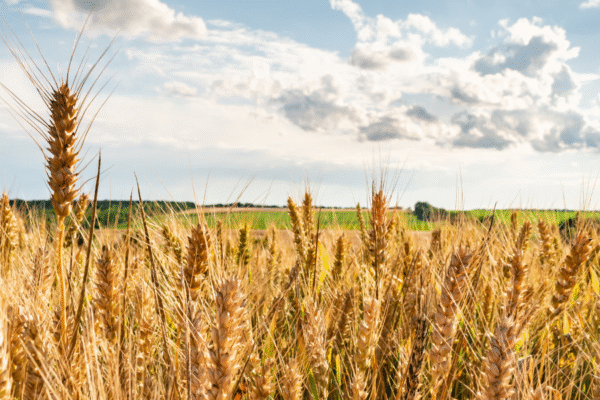
Why we need to start thinking differently about fibers
In many production halls and processing plants, something arises daily that receives little attention:In many production halls and processing plants,…
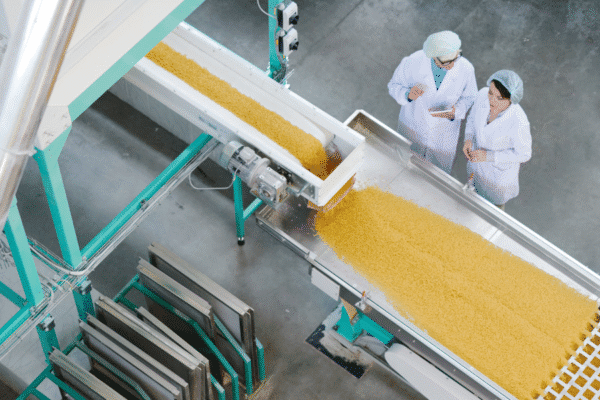
Gemba Walk in the Food Industry: How Companies Uncover Hidden Potential in a Single Day
The Gemba Walk is a proven method derived from Lean management. It involves managers or consultants visiting the “real place“—specifically,…

Video: How “Food Save” tastes really good
Check out this cool video showing how Markus uses StreamUp to support Felix from PureUp in Basel—turning surplus cherries into…
StreamUp – The Funding Program by UAW
Development and Implementation of a Funding Program for Food Save Solutions
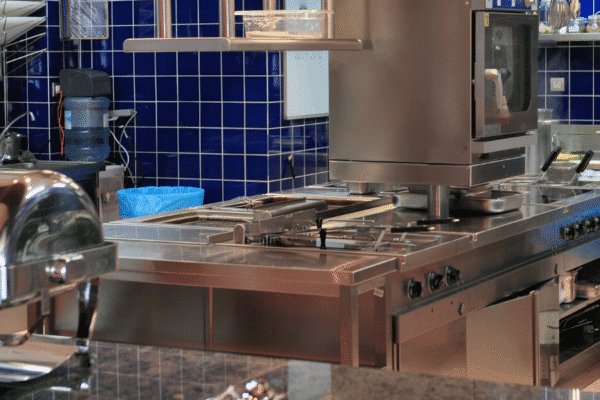
Now funded by BEKB: Food Save Workshop for Gastronomy Businesses
Reduce food waste, lower costs. BEKB supports businesses from Bern and Solothurn with a free expert workshop.
Now supported by BEKB: Transforming food waste into profitable products and business models.
Transforming side streams into innovative products. BEKB supports businesses from Bern and Solothurn with a free expert workshop.

Sustainability starts on the menu: How menu engineering and neuromarketing guide guests toward better decisions
Sustainable enjoyment is not a matter of chance—it is a matter of good design. The menu is a central tool…