
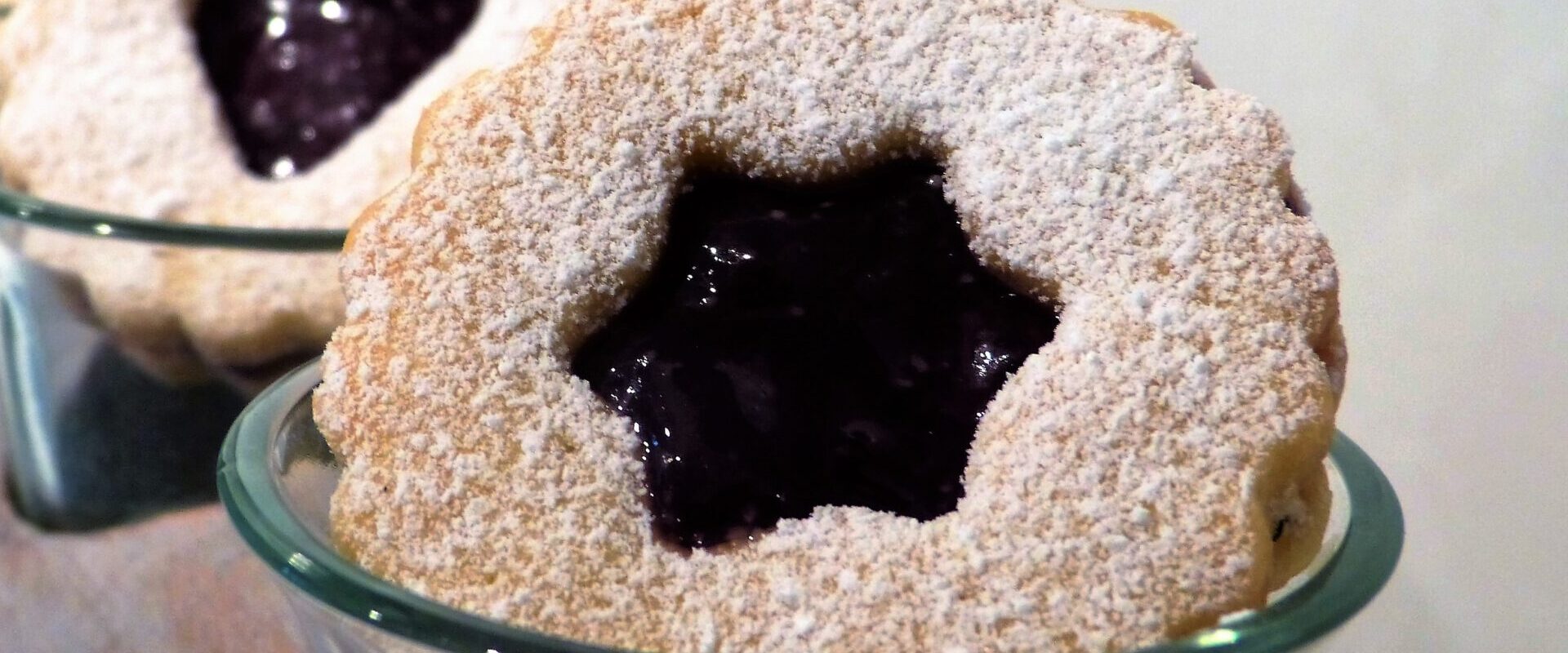
More from your flour – with a delicious *Spitzbuben* recipe for reducing food waste.
By Foodways
More grain, more nutrients, less food waste – why high-extraction flour is the better choice.
Not all flour is created equal—and anyone who bakes regularly knows just how significant the differences can be. But have you ever wondered what is really in your flour? The key lies in the extraction rate.
The extraction rate indicates how much flour is obtained from 100 kg of grain. The higher the rate, the more of the whole grain ends up in the flour. This means that not only the endosperm but also the nutrient-rich outer layers and the valuable germ are retained. In contrast, with conventional white flour—which has a low extraction rate—large parts of the grain are removed, along with many vitamins, minerals, and dietary fibers.
However, it is not just about healthy ingredients, but also about sustainability. A high extraction rate means that more of the grain is utilized and fewer by-products—such as bran or germ—are produced; these often end up being used for animal feed or simply go to waste. Consequently, using flour with a higher extraction rate contributes not only to a more conscious diet but also to the reduction of food waste.
But can you bake just as well with whole-grain flours? In fact, high-extraction flour can present a bit of a challenge, as it contains a lower proportion of gluten and absorbs more liquid. However, innovative mills have long since developed excellent solutions. One example is the “LH2 Kortop” whole-grain from Lindmühle. Thanks to a patented process, it is ground so finely that its consistency and baking properties are virtually indistinguishable from those of white flour—while still retaining all the benefits of the whole grain. It is ideal for increasing the whole-grain content in light baked goods such as sandwich bread, soft rolls (*Weggli*), Ticino-style bread, and many other typical white-flour delicacies.
And what better way to experience the quality firsthand than with a sweet treat? Try our recipe for *Spitzbueben* (jam-filled sandwich cookies) made with fine whole-grain flour, and taste how well sustainability and indulgence go together.
*Spitzbueben* Recipe
Preparation time: 60 min
Baking time: approx. 12–14 min
Ingredients
- 250 g whole grain flour (LH2 IPS Kortop®) or whole grain ancient spelt flour (LH2 IPS Kortop®)
- 170 g cold butter
- 100 g powdered sugar
- 1 egg yolk
- 1 pinch of salt
- 1 tsp vanilla powder
- A little orange zest
Finishing
Powdered sugar
Jam of your choice
Preparation
- Rub the flour and butter together in a food processor.
- Only then add the sugar, egg yolk, salt, vanilla, and orange zest, and bring everything together into a smooth dough.
Forms
- Preheat the oven to 170°C (top and bottom heat).
- Roll out the dough on a floured work surface to a thickness of 3 mm.
- Then, cut out the *Spitzbuben* cookies and place them on a baking sheet lined with parchment paper.
Bake
- Place the baking sheet on the middle rack of the preheated oven and bake for approx. 12–14 minutes.
- Let the cookies cool completely on a wire rack.
Finish
- Evenly dust the cookie tops with powdered sugar.
- Then, spread the underside of the cookie bases with a jam of your choice.
- Finally, top the cookies with the prepared cookie tops.
Good luck and enjoy!
Do you have questions about flour extraction rates? Our expert Sonja from the Foodways team is happy to help. Would you like to learn more about choosing the right flour or get tips for making the perfect *Spitzbuben*? Then please contact our culinary expert, Valentin.
Ihre Ansprechpartnerin: Sonja Maurer

Sonja Maurer ist Ihre Ansprechpartnerin, wenn es darum geht, Prozesse in der Lebensmittelbranche nachhaltiger zu gestalten. Als Consultant bei Foodways unterstützt sie Unternehmen dabei, ökologisch wirksame und wirtschaftlich tragfähige Lösungen zu entwickeln – mit systemischem Blick und praxisnaher Umsetzungsstärke.
Was sie auszeichnet: Sie kennt die Branche aus erster Hand: Als frühere Produktmanagerin bei HelloFresh Schweiz verantwortete sie Sortimente, Prozesse und Produktentwicklungen. Mit ihrem Hintergrund als Lebensmittelingenieurin bringt sie ein tiefes Verständnis für Produktionsabläufe und Qualitätsanforderungen mit – die ideale Basis für nachhaltige Transformation im Betrieb.
Sie möchten den Wandel aktiv gestalten? Sonja Mauer unterstützt Sie gerne mit Ihrem Fachwissen.
Foodways
Weitere Posts

A chocolate with a cherry filling—for Cherry Blossom Day
In Japan, cherry blossoms are celebrated on March 27—a symbol of the beginning of a new cycle and the question…
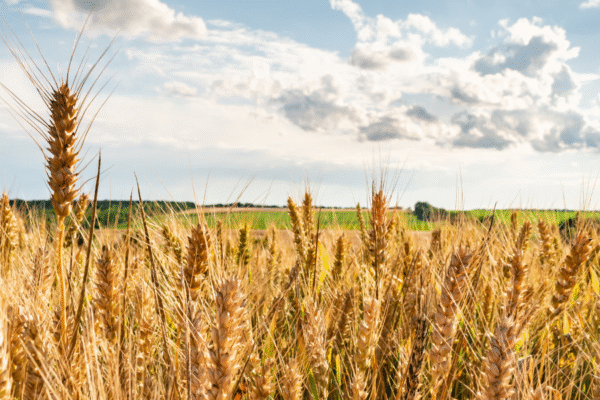
Why we need to start thinking differently about fibers
In many production halls and processing plants, something arises daily that receives little attention:In many production halls and processing plants,…
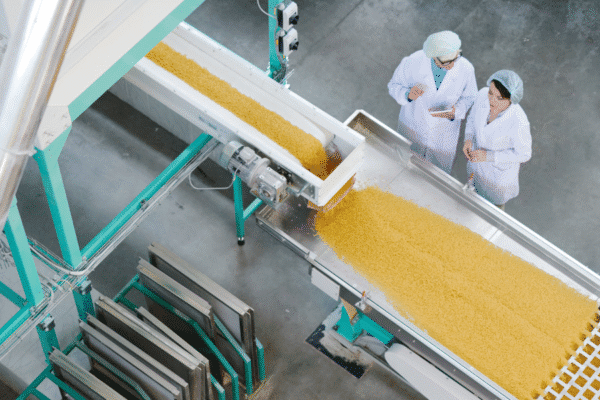
Gemba Walk in the Food Industry: How Companies Uncover Hidden Potential in a Single Day
The Gemba Walk is a proven method derived from Lean management. It involves managers or consultants visiting the “real place“—specifically,…

Video: How “Food Save” tastes really good
Check out this cool video showing how Markus uses StreamUp to support Felix from PureUp in Basel—turning surplus cherries into…
StreamUp – The Funding Program by UAW
Development and Implementation of a Funding Program for Food Save Solutions
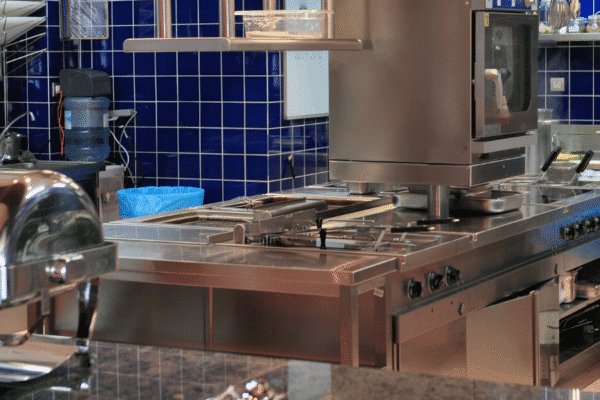
Now funded by BEKB: Food Save Workshop for Gastronomy Businesses
Reduce food waste, lower costs. BEKB supports businesses from Bern and Solothurn with a free expert workshop.
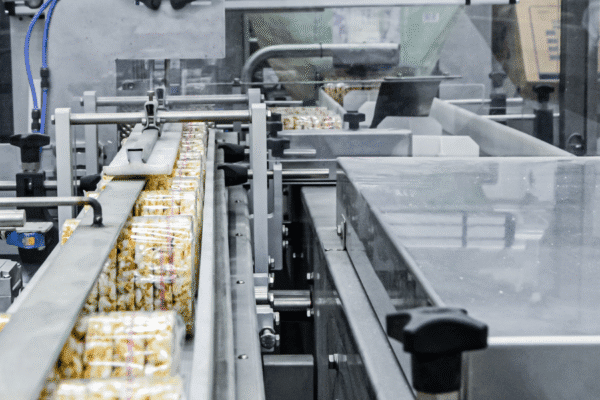
Now supported by BEKB: Transforming food waste into profitable products and business models.
Transforming side streams into innovative products. BEKB supports businesses from Bern and Solothurn with a free expert workshop.
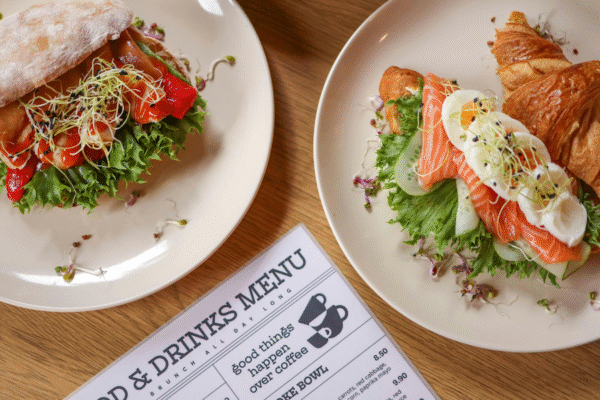
Sustainability starts on the menu: How menu engineering and neuromarketing guide guests toward better decisions
Sustainable enjoyment is not a matter of chance—it is a matter of good design. The menu is a central tool…